
Insights from a gathering across regions and disciplines
“Who (gets to) build” brought together people with the shared aspiration of strengthening connection for new directions in and through the built environment, i.e. the way that places, infrastructure and buildings are planned, financed, designed and maintained.
The co-hosts were
Annabel Short of It’s Material and Alejandra Rivera of Urban Matters
Participants joined from many countries, including Australia, Brazil, Chile, India, Ireland, South Africa, the UK and the US. The session aimed to generate a renewed sense of possibility and to lift up specific interventions for change.(Practical tools and guidance shared during the session are available below).
The session explored the question “Who gets to build?” — beginning with the people physically engaged in construction of materials and buildings and expanding to the broader political and social context as well: who gets to participate in shaping our cities? Who has voice, access, and agency in urban development? The workshop created a space for collective reflection on how economic models, governance structures, and social norms shape participation, justice, and inclusion in the built environment.
Closing reflections included:
- “My takeaway is that the shift is happening, and it’s all about building momentum now”
- “A feeling of approaching critical mass to effect change is palpable”
- And, reflecting a recurrent theme: “We become more fully human when we open ourselves to the ideas and way of life that official knowledge and skill-sets overlook”
The session kicked off with framing the built environment as being (almost) as old as humankind, as having major implications for human experience and the planet, and consisting of a complex system that is fraught with power dynamics but also full of possibilities of change.

Residents, builders, planners, communicators, investors, designers… all have roles to play, while collective endeavors can start to change narratives, and change what gets valued and measured.
The session then honed in on shifts that participants would like to see expanded, such as:
- Opening doors to engagement by taking our emotional connection with the built environment as an entry-point, for example starting with an open question like “what is a place or building that means a lot to you?”
- Recognizing and respecting existing value and practices, and diverse forms of knowledge, expertise and language – including indigenous worldviews that reject the dualism between humans and nature
- Shifting from “doing to, or for”, to “doing with”, including examples of universities connecting thoughtfully and ethically with surrounding communities in co-produced research
- And shifting finance (recognizing that sixty percent of the world’s “assets” are in real estate), bridging gaps between finance and social and environmental needs, and expanding alternative economic and legal frameworks that are already seeing growing traction around the World.
The event was a chance to step back from the day-to-day, and a stepping stone for continued momentum.
**************************
Materials
These are some of the materials and opportunities for collaboration shared during the session:
- Examples of innovation already underway, such as “InfraHub Africa”, the “Building Transformation StoryMap”, “100 union actions for climate justice” and “Social innovation practices for resilience and equity”
- Insights from Nepal: “What the world can learn from Nepal’s home-grown, people-centric energy transition?”
- The San Code of Research Ethics, as an example of guidance for researchers to partner respectfully and ethically with communities (in this case San communities in Southern Africa)
- The Dignity by Design framework from IHRB and partners, guiding the protection and respect of human rights from the earliest stages of built environment projects – and the accompanying report “Dignity by Design“
- The results of an eight-city global research and visioning study on human rights and climate action in the built environment – and related presentation
- New professional certificate on human rights and the built environment: open to participants around the World
- The “Taskforce for Affordable and Sustainable Housing” that seeks to align global real estate investment with human rights and planetary boundaries (an initiative of The Shift, Predistribution Initiative, International Union of Tenants and IHRB)
- It’s Material newsletters such as “Who Owns Cairo?” (featuring research by 10Tooba) and “Sand and Growth” (featuring research by Arpita Bisht, who attended and contributed to this session)
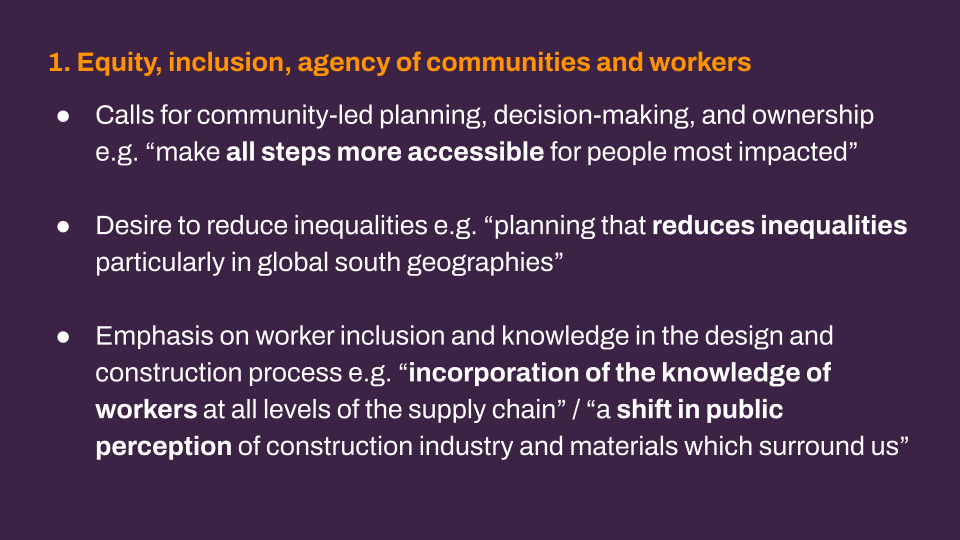
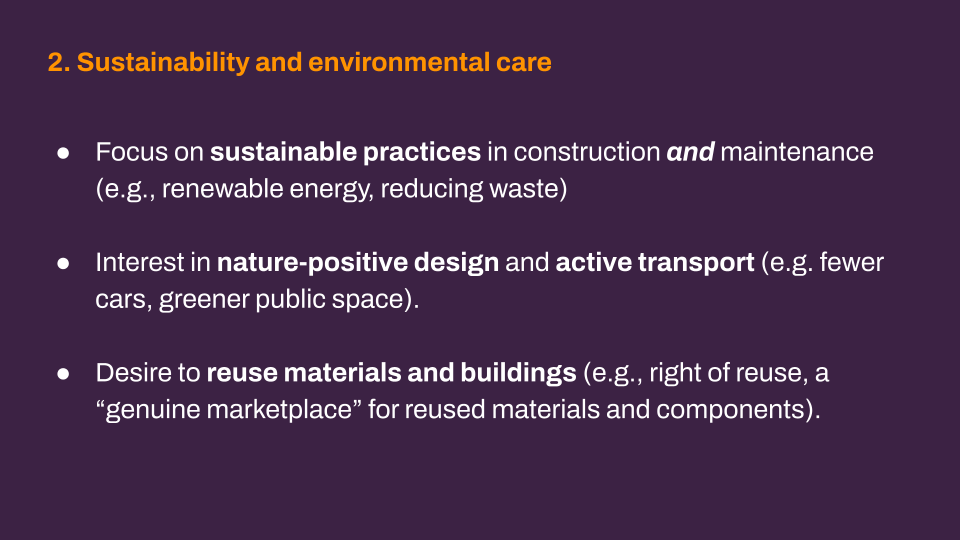
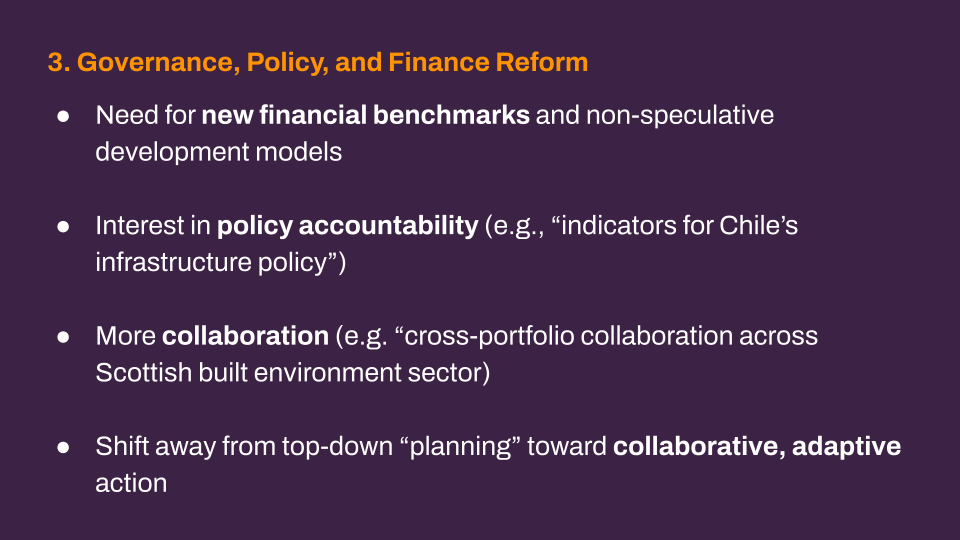
Prior to the event participants received an “appetizer deck”, and were also asked to briefly answer the question: “What is one change you would love to see in the built environment? For example a shift in how it is financed, planned, designed, constructed or maintained.”
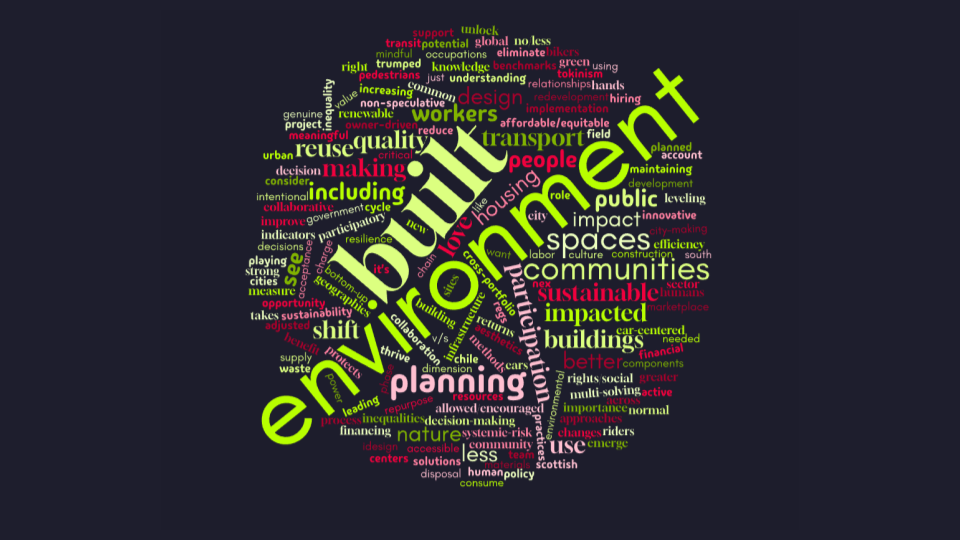
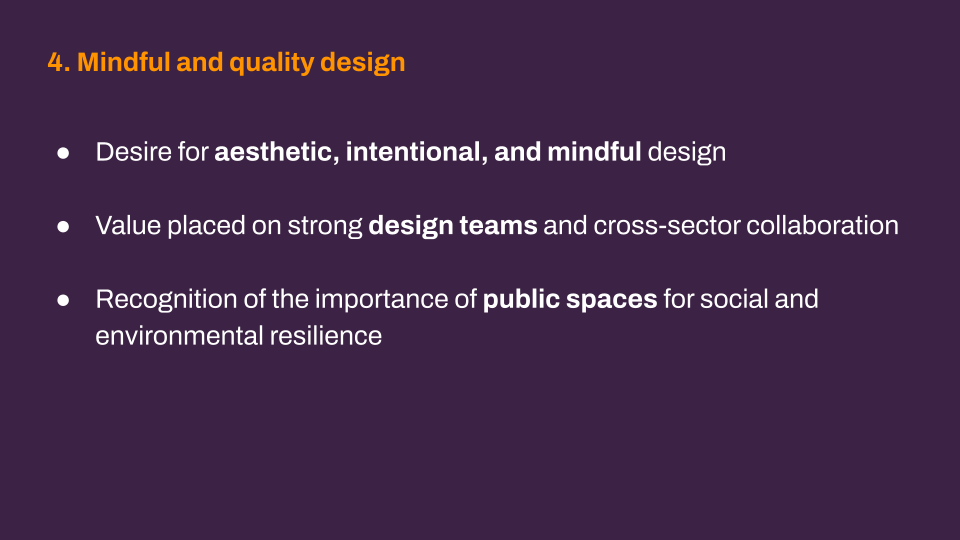
These slides and the WordCloud above summarize themes that emerged from the responses.
ABOUT THE CO-HOSTS
It’s Material is a social enterprise that strengthens connection between people, places, and the processes that shape them.
We provide support with: creative communication; facilitation and bridging silos; and strategy design. Currently we are focused on two needs:
- Expanding agency: broadening which perspectives are heard and engaged, in any given context, to build stronger, more authentic and dynamic narratives and outcomes (a multiplicities approach)
- Shifting finance: Contributing towards shifts in economic thinking and doing
Follow It’s Material on LinkedIn for updates and collaboration opportunities.
Contact: annabel@its-material.com
Urban Matters is a newly formed international consultancy committed to enabling transformative change through:
- Research
- Advisory Services
- Co-design of Strategies & Programs
Just like this workshop, we aim to advance social and environmental regeneration through inclusive, just approaches in the built environment.
Follow Urban Matters on LinkedIn for updates and collaboration
opportunities.
Contact: alejandra@theurbanmatters.world